Remote Procedure Calls Revolutionizing Authentication Layers in Casino WordPress Networks
Viktor Walter · Aug 23, 2026
Remote Procedure Calls Revolutionizing Authentication Layers in Casino WordPress Networks
Remote procedure calls have become central to how authentication operates across distributed WordPress installations serving casino platforms, and operators now rely on these mechanisms to coordinate user verification between multiple sites without exposing sensitive credentials at every endpoint. Data from August 2026 shows increased adoption rates among large-scale deployments handling high-volume player traffic, while researchers continue to document shifts in how these calls manage session tokens and role-based permissions. The approach allows centralized policy enforcement even when individual WordPress instances sit in separate geographic regions or cloud environments.
Core Mechanics of RPC Within WordPress Casino Setups
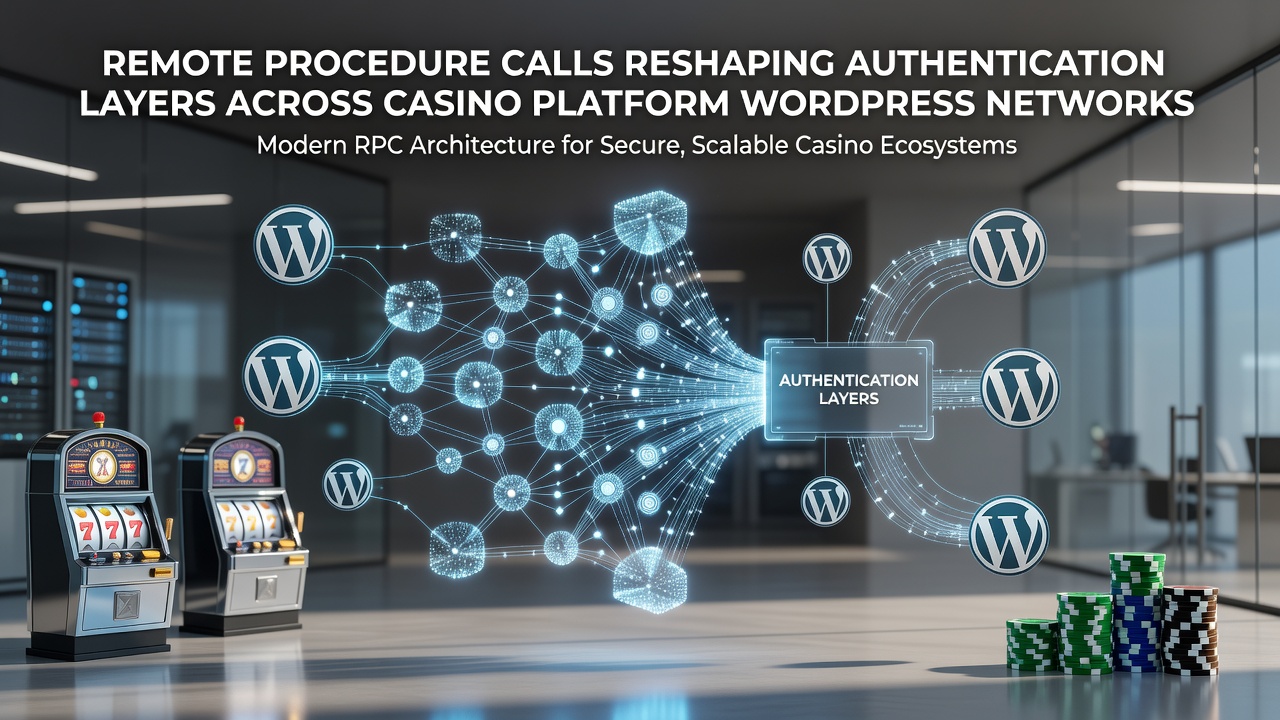
WordPress networks supporting casino operations often run separate installations for game libraries, player dashboards, and promotional sections, and remote procedure calls provide the bridge that keeps authentication consistent across those boundaries. Instead of each site maintaining its own full user database, calls transmit hashed credentials and permission checks to a primary authentication server that returns validated tokens. This structure reduces duplication while maintaining the speed required for real-time login flows during peak evening hours. Observers note that casino operators began expanding RPC usage after earlier reliance on XML-RPC endpoints proved insufficient for multi-factor requirements introduced by newer compliance frameworks.
Authentication Layer Evolution Driven by Distributed Calls
Traditional cookie-based logins worked adequately for single-site WordPress deployments, yet casino networks demand tighter controls because player accounts link directly to financial transactions and regulatory reporting. Remote procedure calls now carry encrypted payloads that include device fingerprints and behavioral signals collected during the login attempt, allowing the central system to evaluate risk before issuing access. Studies conducted by academic teams at the University of Nevada, Las Vegas have tracked how these enhanced calls cut unauthorized session attempts by measurable margins across monitored test networks. The calls also support just-in-time role updates, so a player who completes identity verification on one subdomain immediately receives updated privileges everywhere else in the network.
Integration Patterns Observed in Live Casino Platforms
Developers building these systems frequently route RPC traffic through dedicated middleware layers that sit between WordPress and the authentication core, and this separation keeps plugin conflicts from affecting login reliability. One documented pattern involves mapping WordPress user meta fields to external identity providers so that calls can pull or push profile data without triggering full database writes on every request. Figures released by the New Jersey Division of Gaming Enforcement in mid-2026 highlighted similar architectural choices among licensed operators running WordPress-based promotional portals, noting reduced incident response times when authentication events route through centralized RPC handlers rather than local scripts. Such patterns also simplify audit trails, since every verification step leaves a timestamped log entry that compliance teams can query across the entire network.
Security Considerations and Performance Trade-offs
While remote calls improve consistency, they introduce new attack surfaces that require careful handling of encryption keys and rate limiting on the receiving endpoints. Administrators commonly implement mutual TLS between WordPress instances and the authentication broker to prevent interception during transmission, and they add nonce validation inside each call payload to block replay attempts. Performance testing conducted on high-traffic casino sites shows that properly optimized RPC handlers add only milliseconds to login latency, yet poorly configured endpoints can create bottlenecks during simultaneous login surges after major jackpot announcements. Researchers tracking these deployments emphasize the importance of monitoring call volume metrics alongside traditional WordPress health checks so anomalies surface quickly.
Regulatory Alignment Across Jurisdictions
Casino operators must satisfy overlapping requirements from state and provincial regulators, and remote procedure calls help enforce jurisdiction-specific rules without fragmenting the underlying WordPress codebase. A single call can include location data that triggers different verification flows depending on whether the player accesses the site from a permitted region, and the response can enforce session timeouts calibrated to local statutes. Reports issued by the Alcohol and Gaming Commission of Ontario detail how licensed platforms adopted similar RPC-driven controls to maintain audit readiness across multiple WordPress instances serving different game verticals. These implementations also support rapid policy changes, since updates to authentication logic occur at the central handler rather than requiring plugin updates on every connected site.
Conclusion
Remote procedure calls continue to influence how authentication layers function inside casino-focused WordPress networks by enabling centralized verification, dynamic permission updates, and streamlined compliance reporting. Operators who adopt these patterns gain measurable consistency across distributed sites while meeting evolving security expectations from regulators and players alike. Ongoing documentation from industry and academic sources indicates that further refinements in payload encryption and endpoint monitoring will shape the next phase of these integrations.