4 Jun 2026
Tracing Configuration Pathways Across Gaming Network Frontends
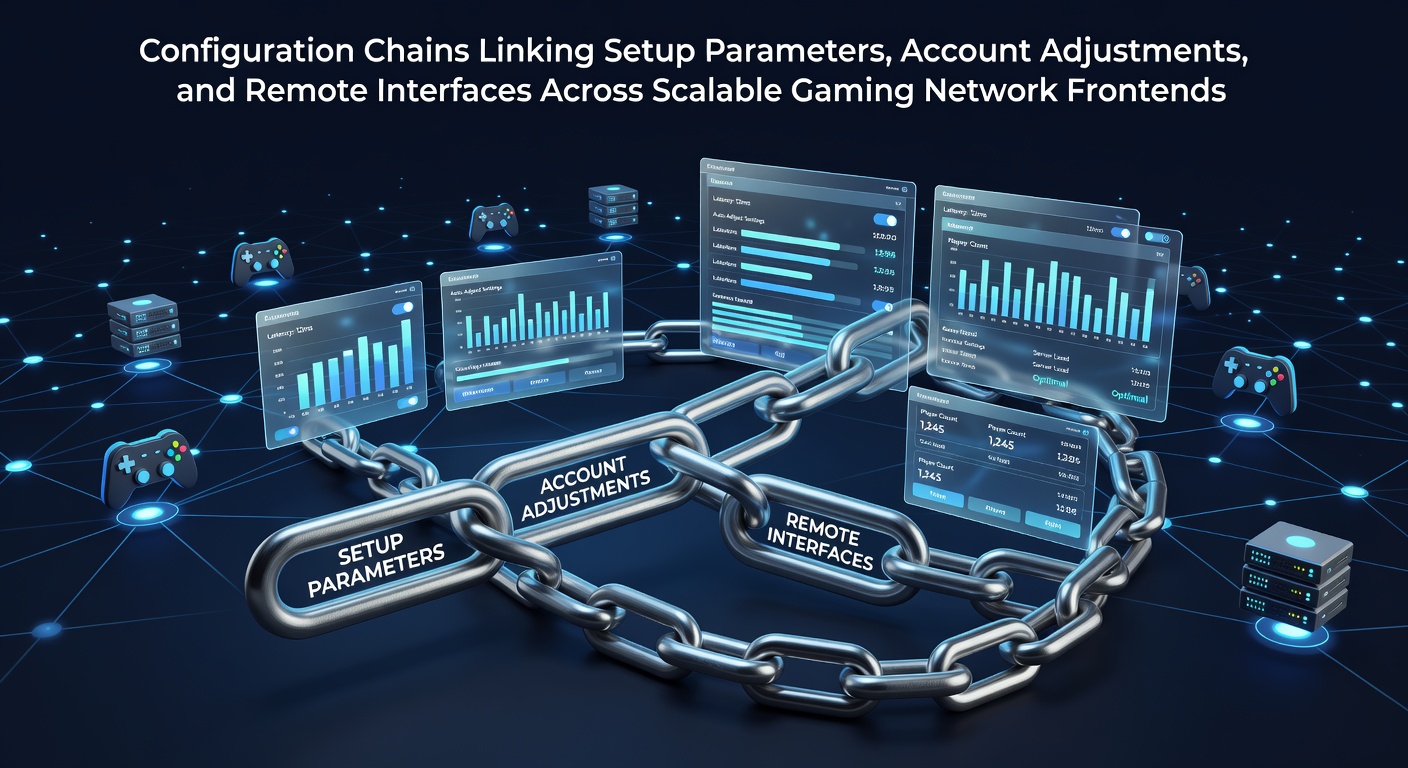
Configuration chains form the backbone of scalable gaming network frontends, where setup parameters connect directly to account adjustments and remote interfaces in layered sequences. These chains allow systems to propagate changes across distributed environments without manual intervention at each node, and operators rely on them to maintain consistency when traffic spikes occur during peak hours. Data from industry deployments shows that such linkages reduce latency in account updates by routing adjustments through predefined parameter sets that interface with remote endpoints.
Setup Parameters as the Foundation Layer
Setup parameters define core behaviors for gaming platforms, including session timeouts, authentication thresholds, and resource allocation rules that scale with user volume. In June 2026, several North American operators expanded their frontend deployments, integrating parameter chains that automatically adjust based on load metrics reported from remote monitoring tools. Those who've studied these systems note how parameters cascade through the chain: an initial value for maximum concurrent sessions triggers downstream adjustments in account provisioning, which then signal remote interfaces to allocate additional server instances. This process keeps frontends responsive while preserving security protocols across regions.
Account Adjustments Flowing Through Linked Chains
Account adjustments travel along the same configuration pathways that originate from setup parameters, enabling real-time modifications such as balance updates or permission shifts without disrupting active sessions. Observers note that these adjustments often rely on synchronized clocks between local databases and remote interfaces to prevent race conditions during high-volume periods. Research from Canadian regulatory bodies highlights cases where misaligned parameters led to delayed account syncs, prompting operators to embed verification steps within the chain itself. The result appears in systems that handle thousands of concurrent adjustments per minute while maintaining audit trails for compliance reporting.
Remote Interfaces Connecting Distributed Frontends
Remote interfaces serve as the endpoints where configuration chains terminate, translating parameter-driven instructions into actions across geographically dispersed gaming networks. These interfaces typically support API calls that carry encrypted payloads containing both setup data and account directives, allowing seamless scaling when new regions come online. A report from the Australian Communications and Media Authority details how operators in that market use chained configurations to manage remote authentication during cross-border play events. What's significant is the way interfaces validate incoming adjustments against existing parameter sets before execution, reducing error rates in live environments.

Scalability Patterns in June 2026 Deployments
By June 2026, scalable gaming frontends incorporated dynamic configuration chains that expanded or contracted based on real-time metrics gathered from remote interfaces. European gaming associations documented several instances where parameter adjustments automatically propagated to account profiles during major sporting events, ensuring frontends remained stable under sudden load increases. Those who've examined the logs from these deployments find that chains often include fallback mechanisms, rerouting traffic when one interface reports capacity limits. This approach supports growth without requiring complete system overhauls, and it aligns with broader trends in distributed computing for entertainment platforms.
Security Considerations Within Parameter Chains
Security protocols embed themselves at multiple points along configuration chains, where setup parameters enforce encryption standards before account adjustments reach remote interfaces. Data indicates that operators who segment their chains by region achieve faster incident response times, as adjustments can be isolated without affecting the entire network. Academic studies from institutions focused on network security emphasize the importance of logging every hop in the chain, creating traceable records that regulatory bodies can review during audits. Such practices became standard in larger deployments throughout 2026 as frontends handled increasing volumes of international traffic.
Integration Challenges and Observed Solutions
Integration of these elements presents challenges when legacy systems meet newer remote interface standards, yet operators have addressed many through incremental parameter refinements. One documented case involved a multi-state network that updated its chain logic to accommodate variable account adjustment frequencies, resulting in smoother performance across frontends. Government reports from multiple jurisdictions show consistent patterns: chains that incorporate validation at each linkage point experience fewer synchronization failures during peak usage. Those managing such environments often prioritize testing sequences that simulate full propagation from setup to remote execution.
Conclusion
Configuration chains that link setup parameters, account adjustments, and remote interfaces continue to evolve within scalable gaming network frontends, supporting operational demands observed through mid-2026. These structures enable coordinated responses across distributed systems while meeting compliance requirements from varied regulatory sources. As networks expand, the emphasis remains on maintaining clear pathways that preserve both performance and security standards in live deployments.